
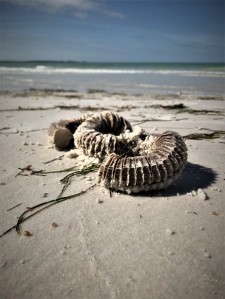
 One of my earliest connections to the marine environment were seashells. From a young age we took frequent vacations to visit my grandparents on Anna Maria Island in Florida. It was a thousand-foot walk to the beach–the Gulf of Mexico–and it was our daily destination. We’d often walk the beach before breakfast and then later spend hours lounging, swimming, reading and sand castle-building.
In addition to the frequent “good mornings” (and their reciprocation) from fellow walkers, those morning strolls often included keeping a keen eye out for shiny or colorful sea shells. As my interest in sea shells grew, I’d spend more and more of my other beach time picking through the shells at the wash line or just beyond the typically calm break.
As I grew a little older and a little more adventurous, donning a dive mask opened up a new world. I could swim a little farther out and I would look for actual live mollusks. At that point in time, I knew the best quality shell–the shiniest and most colorful–came from a live animal. I didn’t over-collect, but I did take my share back to the house and an old pot of water to boil away the creature inside the shell.
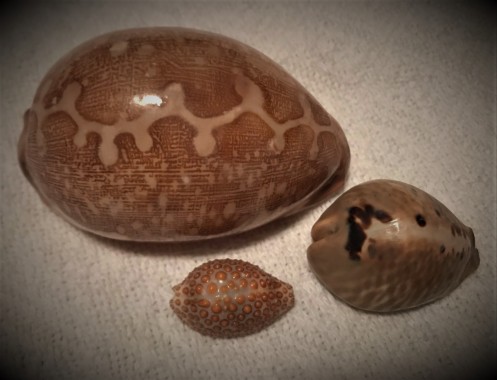 At that time I also developed a relationship with the owners of a shell shop on Anna Maria Island–when we were there on vacation year after year. I was particularly fond of cowrie shells–most of which were from areas of the Pacific or Indian Oceans. As I focused on these beautiful and uniquely shaped shells, I ordered rarer specimens–not really considering the impact of the methods used or of the demand created for exotics. I think at some point I realized they were being collected as live mollusks–but as a collector realized I was getting the best specimens that way.
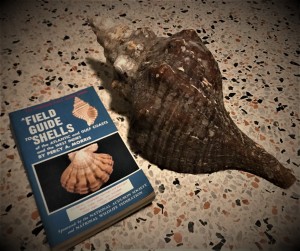 When I was old enough (8th grade), I learned to SCUBA dive with my buddy Jackie. He was interested in seeing the fish and I was interested in just about everything else–but mostly living shells. In New Jersey, there wasn’t much that I was interested in collecting. So when we dove there, I observed the fish and crustaceans. But, on my first family vacation to Florida as a certified diver I was looking to get out on a boat and dive–for the fish, for the overall “exotic” experience, but also to see what kind of live mollusks I might discover and collect. On the second, shallower dive of that offshore boat trip I collected two large horse conchs–living creatures.
I was excited by the dives. I was excited by the support of the boat captain/divemaster for my enthusiasm and expertise. I think he thought it was cool that I was starting so young and was so obviously gung-ho. I’m sure I thought it was cool that he made his living SCUBA diving. On the ride back to the marina he offered to take me on a commercial collecting trip with one of the owners of the sea shell store I mentioned earlier. It would be a local, shallow water trip using a surface-supplied, “Hooka” rig that floated in an innertube. Of course, I jumped at the chance.
The shallower draft boat took us off the waters between Anna Maria Island and Passage Key. There we dove in some more challenging conditions–deeper water and swift currents–in search of live sea urchins. It was a shorter dive, but we collected several large mesh bags full of critters.
Following that dive, we refueled, rested and motored over to the shallow sand flats and grass beds on the backside of Egmont Key. It’s here that we really got to work–firing up the surface-supplied rig and collecting just about everything we saw. Sigh. At the time I was excited with what I saw and what I collected–live lightning whelks, lettered olives, moon snails, banded tulips, crown conchs and sand dollars–lots of sand dollars. I remember scooping handfuls into large mesh bags as I swam along underwater–many handfuls and many bags.
On the boat trip back to the marina it was the multiple bags of sand dollars that gave my young mind serious pause–too many. I was only beginning to really understand and implement ideas of ecology, conservation and environmentalism in my own life. I knew the shell shop sold a lot of sand dollars, but that was just too many.
I’m certain that long ride in the boat back to the dock on Anna Maria Island–watching all that we collected die–was a bit of an epiphany. I never took a trip like that again. Sure, I still collected a few live shells from time to time–but even that eventually ended as I realized the impact it was having on the populations of those species.
These memories came flooding back to me recently–prompted by-the posting of a photo of a beautiful cowrie shell by an acquaintance on Facebook and by the biography of Henry David Thoreau that I had just completed.
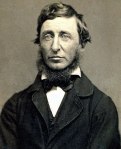 I realized my long-ago ethical transformation had evolved in a similar manner to Thoreau’s. For several years, Thoreau funded his writing by providing specimens (birds, reptiles and small mammals) for Harvard zoologist Louis Agassiz. Thoreau killed these creatures and only later in life lamented his actions and changed his mindset and refused future requests for specimens. From that point his writing grew even more eco-philosophical in nature as well as more objective–learning the habits and characteristics of living things through patient and careful observation.
These days when I walk the beach I still look very discerningly at the shells washed along the tideline. Occasionally I spot and pick out something special. Sometimes I’ll even carry it with me for a bit–usually setting it carefully back down a few hundred yards later and hoping another appreciative walker will pick it up. Rarely, it will go in my pocket and I’ll take it home. But, every time I there is something I take home–a memory of my early days of shell collecting and the evolution in ethics and action it instigated.
***
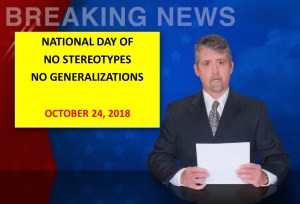 Alt-Right, Snowflake, Neo-Nazi, Libtard, Left, Right, Liberal, Fascist and Conservative are just a few of the generalizations and stereotypes regularly bombarding us on television, in newspapers and on the web. For a country that holds individualism–and individual rights–in such high esteem it’s mind-boggling how quickly we are to put individuals in an easily-recognizable and generalized category.
 So what exactly is the challenge? Well from 12:01am to 11:59pm on Wednesday, October 24 all media–television, radio, web and newspapers will cease using stereotypes and making generalizations. What does that entail? Well, it entails some pretty laborious and exacting journalism–naming and discussing individuals and not lumping them into easy-to-label general categories. If it sounds like a generalization or stereotype–even remotely–don’t use it.
 This morning I finished reading
  One of the most common “writer threads” on Twitter, Facebook or Instagram typically deals with crazy online research and writer worries over alarming authorities, being “watched” or even being officially questioned for that research–even though I’ve never seen proof of any of that happening. I’m sure many readers can imagine–given the wide range of genres–some of the topics writers explore–although most people can’t imagine the detailed tangents many of us take as we surrender to our curiosities.
 For
For  For my current work-in-progress, Delphys Rising, some of my research is a little further out on the spectrum of what might be considered “suspicious” by the Big Brothers that might be watching. The slightly crazier research has included the geography of North Korea, North Korean military installations (locations and type), North Korean submarines and North Korean missile programs.

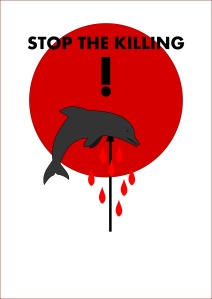 For Delphys Rising I’ve also done extensive research on Japanese whaling, the dolphin/small whale drive hunts in Taiji, Japan and the Faroe Islands as well as the animal rights protesters addressing those hunts. And, while I don’t consider most of these protesters “eco-terrorists,” my plot required me to look into groups that are considered that radical.


 What I saw over my right shoulder to the west stopped me–orange and shadow rays emanating from a focal point in the west. In the west?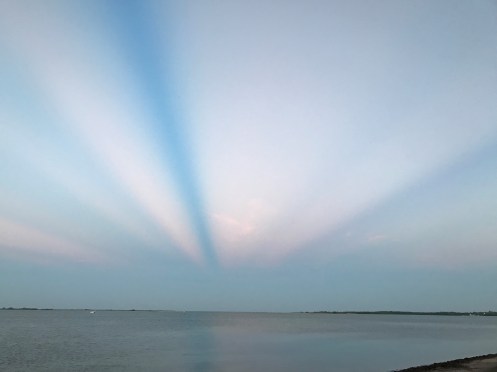
 There is an empty lot in our neighborhood that is now much emptier.
 It’s difficult to put into words how much I was influenced by the work of Jacques-Yves Cousteau. As a young boy I read of his adventures in National Geographic Magazine, spent many an evening laying on the living room floor watching his television series and specials and was an early member of The Cousteau Society.
 Not all productive writing sessions are about scenes and dialogue flowing from fingers flying across the keyboard and ending with a huge word count. Don’t get me wrong–I do like those days. But word count is not the end-all be-all for a novelist.
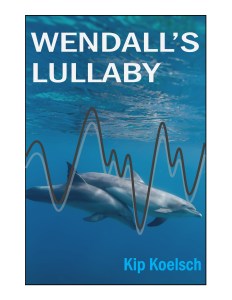 The completion and publishing of
  Today I came to grips with that realization and rallied to spend most of my writing session in my head–alternately sitting at my desk scrawling notes, pacing through the house, staring through the trees swaying in the wind and taking some photos of the cats. My real breakthrough came early on–digging through notes I’d buried during last week’s cleaning of my office and finding a page scrawled with potential plot directions and twists. Viola!
 Kip Koelsch Author